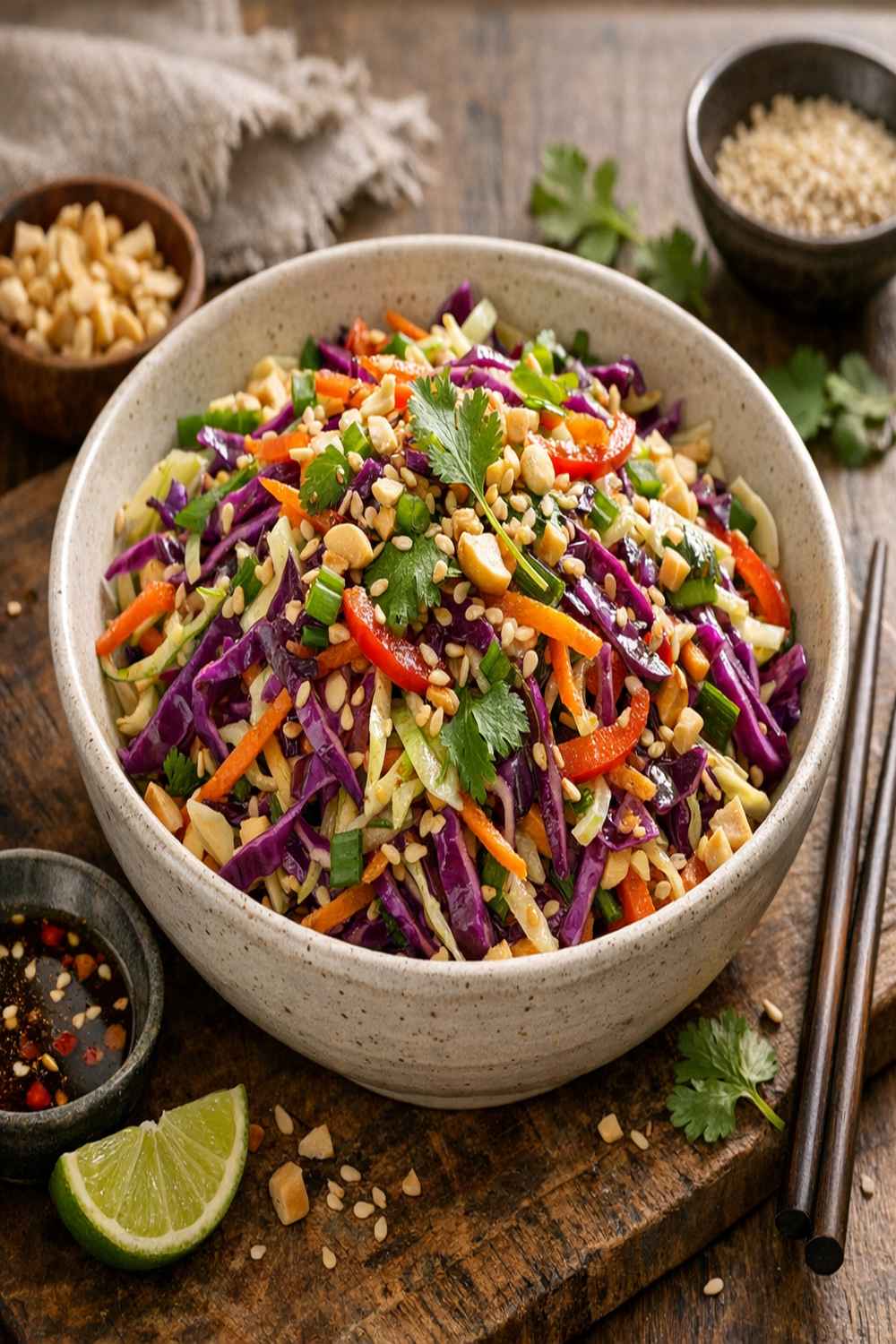

Ingredients
Method
Step 1: Prepare Your Cabbage Properly
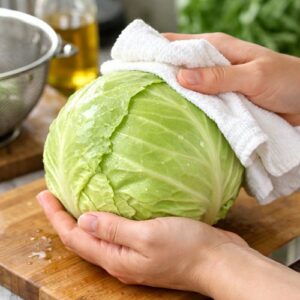
- Start by removing any yellowed or damaged outer leaves from your cabbage head. Rinse the head under cold water and pat it completely dry—moisture is the enemy of crispy slaw. Using a sharp chef's knife, cut the cabbage in half from top to root. Place the flat side down on your cutting board (this keeps it stable and safe). Slice off the core at an angle. Now, slice the cabbage into the thinnest ribbons you can manage—thinner than you think necessary. This is where a mandoline truly shines if you have one, but a sharp knife works beautifully too. You're aiming for pieces roughly the size of a matchstick or thinner. Place all your shredded cabbage into a large mixing bowl. You should have approximately six to seven cups. Don't pack it down.
Step 2: Add Your Fresh Aromatics and Herbs
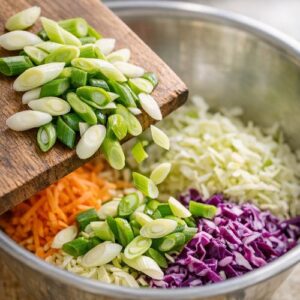
- Slice your scallions at a slight angle, using both the white and light green parts (save the dark green tops as garnish if you want). Add these to your cabbage bowl. Now chop your cilantro—if you're using parsley instead, that's perfectly fine and often cheaper. The herb's job is to add freshness and complexity. Add the cilantro directly to the cabbage and scallions. Gently toss everything together with your hands or two forks. This initial mixing distributes the herbs throughout so you get a little in every bite. Set this bowl aside while you make your dressing.
Step 3: Create Your Dressing in a Separate Bowl
- Pour your three tablespoons of olive oil into a small mixing bowl or a jar with a tight lid. Add the rice wine vinegar next. Now—and this is important—whisk or shake these together first before adding anything else. This emulsifies them slightly and creates a better base. Add your honey or maple syrup (I prefer honey because it's usually cheaper). Stir until the sweetener dissolves. Add your soy sauce or coconut aminos. Now add your minced or grated ginger and garlic if using. Finally, add your salt and any chili flakes. Start with just one teaspoon of the sesame oil at this point. Sesame oil is potent, and you want to taste first before committing to more. Whisk or shake everything together vigorously until combined. The dressing should smell intensely aromatic—ginger-forward with a sweet-savory balance.
Step 4: Combine and Taste
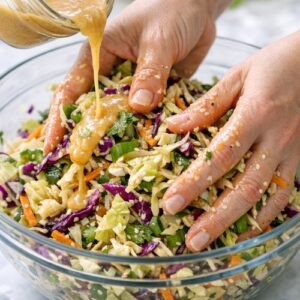
- Pour your dressing over the cabbage mixture. Using two forks or your hands (I use my hands for better control), toss everything together for about one minute. This isn't gentle—you want the dressing to coat every piece of cabbage. The cabbage will begin to release a tiny amount of liquid, which is exactly what you want. It means the dressing is penetrating the leaves. Taste a forkful. This is your moment to adjust. Does it need more sweetness? Add a touch more honey. Does it taste flat? Add a pinch more salt. Does it need more Asian flavor? Add another half teaspoon of sesame oil and toss again. Taste once more. You should taste the brightness of vinegar, the warmth of ginger, the savory depth of soy, and the nuttiness of sesame balanced with the sweetness of honey. If any one flavor is overwhelming, you can adjust.
Step 5: Finish With Texture and Garnish
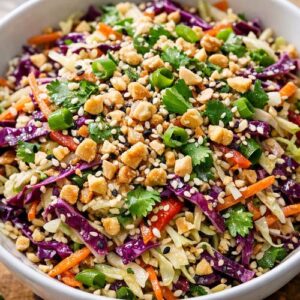
- Crush your peanuts or cashews into roughly dime-sized pieces—not a powder, but not whole either. Sprinkle these over the top of your slaw along with your toasted sesame seeds. If you saved those dark green scallion tops, scatter them on top too. Don't stir these in yet. Let them sit on top so they stay crunchy. This is the presentation. Now, at this exact moment, your coleslaw is at peak crispness and flavor. Serve it immediately, or if you're making it ahead, wait to add the nuts and seeds until just before serving.
Notes
- Over-dressing the cabbage - the most frequent mistake I see is people who make too much dressing or pour it all at once. Start with three-quarters of your dressing, toss well, taste, then add more if needed. Extra dressing pools at the bottom and makes the slaw soggy. Leftover dressing keeps in the refrigerator for a week and works beautifully on other salads.
- Using pre-shredded cabbage - yes, it costs more, but the real problem is that pre-shredded cabbage has already begun to oxidize and break down before you even open the bag. It absorbs dressing unevenly and turns mushy within hours. Shredding your own takes eight minutes and costs one-third as much.
- Skipping the taste-and-adjust step - every batch of soy sauce and every batch of ginger is slightly different in intensity. Your honey might crystallize slightly differently than mine. Tasting and adjusting takes thirty seconds and is the difference between "nice coleslaw" and "where did you get this restaurant recipe?"