This post contains affiliate links. As an Amazon Associate I earn from qualifying purchases.
I grew up watching my grandmother transform a single head of cabbage into three different meals for our family of six. She never wasted money on prepared salads or takeout. Instead, she’d shred that cabbage by hand and dress it with whatever vinegar and oil we had on hand. Those meals tasted like love and resourcefulness mixed together. Today, I’m sharing her spirit with a modern twist—an Asian coleslaw that tastes restaurant-quality but costs just pennies per serving. This recipe has fed my own family countless times, and it pairs beautifully with everything from beef stir-fry to simple grilled chicken.
Why Your Coleslaw Turns Soggy (And How to Fix It)
I hear it all the time from clients: “Martha, my coleslaw gets watery by lunchtime.” Sound familiar? The problem isn’t the cabbage. It’s timing and technique. Most recipes pour the dressing over raw cabbage and expect it to hold up for hours. It won’t. After a decade of clinical practice and growing up in a kitchen where nothing went to waste, I’ve learned the secret: dress your slaw just before serving, or use a specific technique to keep it crisp. This recipe works both ways. You can prepare the components separately and toss them together fresh, or you can make it ahead and it’ll stay surprisingly crunchy for two to three days because of how we’re treating the cabbage.
What Makes This Asian Coleslaw Recipe Different?
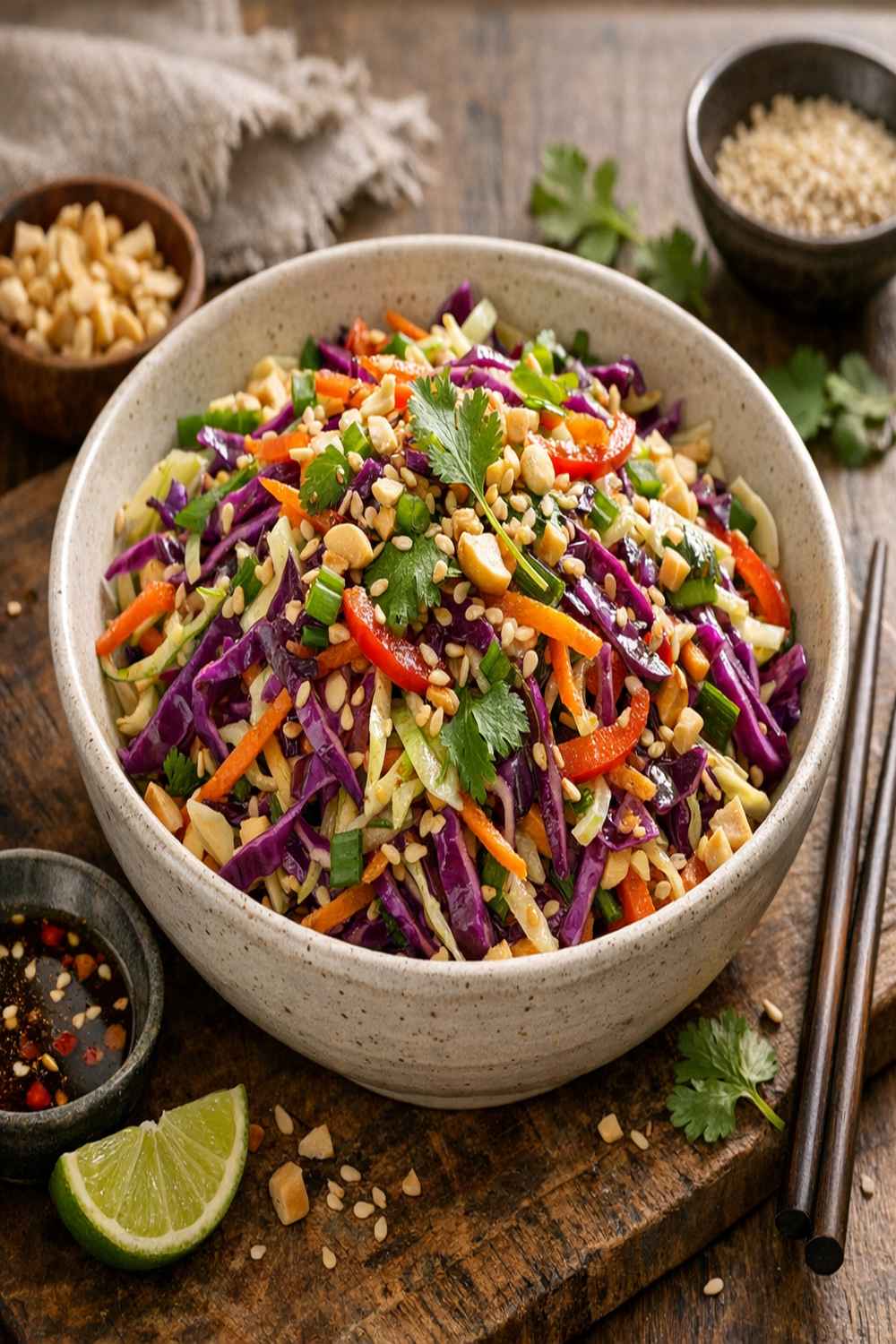
The magic is in three places. First, we’re shredding the cabbage ourselves instead of buying pre-shredded (which costs three times as much and has already begun breaking down). Second, we’re using a balance of oils—regular olive oil for body and toasted sesame oil for that unmistakable Asian flavor without overwhelming the dish. Third, we’re including both acid from rice wine vinegar and a touch of sweetness from honey or maple syrup, which creates a dressing that doesn’t assault your palate but instead develops more flavor as it sits. This isn’t just coleslaw. This is a side dish that tastes better the next day.
Before You Start: What You Need to Know
Two critical pieces of knowledge will change how you approach this recipe. Cabbage varieties matter more than you think. Green cabbage is your budget friend—it’s cheaper, heartier, and stays crisp longer than purple or napa. Purple cabbage will work, but it costs more and releases pigment that can stain your dressing. Napa cabbage is delicate and wilts quickly. Stick with green. Second, the way you shred your cabbage determines everything. A sharp knife or mandoline creates thin, even pieces that dress evenly and feel tender when you bite into them. A dull knife creates bruised, uneven pieces that weep liquid and feel mushy.
- Use a sharp knife or invest in an inexpensive mandoline – even shreds mean even dressing distribution and consistent texture throughout
- Shred your cabbage no more than four hours before dressing – this prevents oxidation and keeps it bright and crisp, not gray and tired-looking
The Ingredients
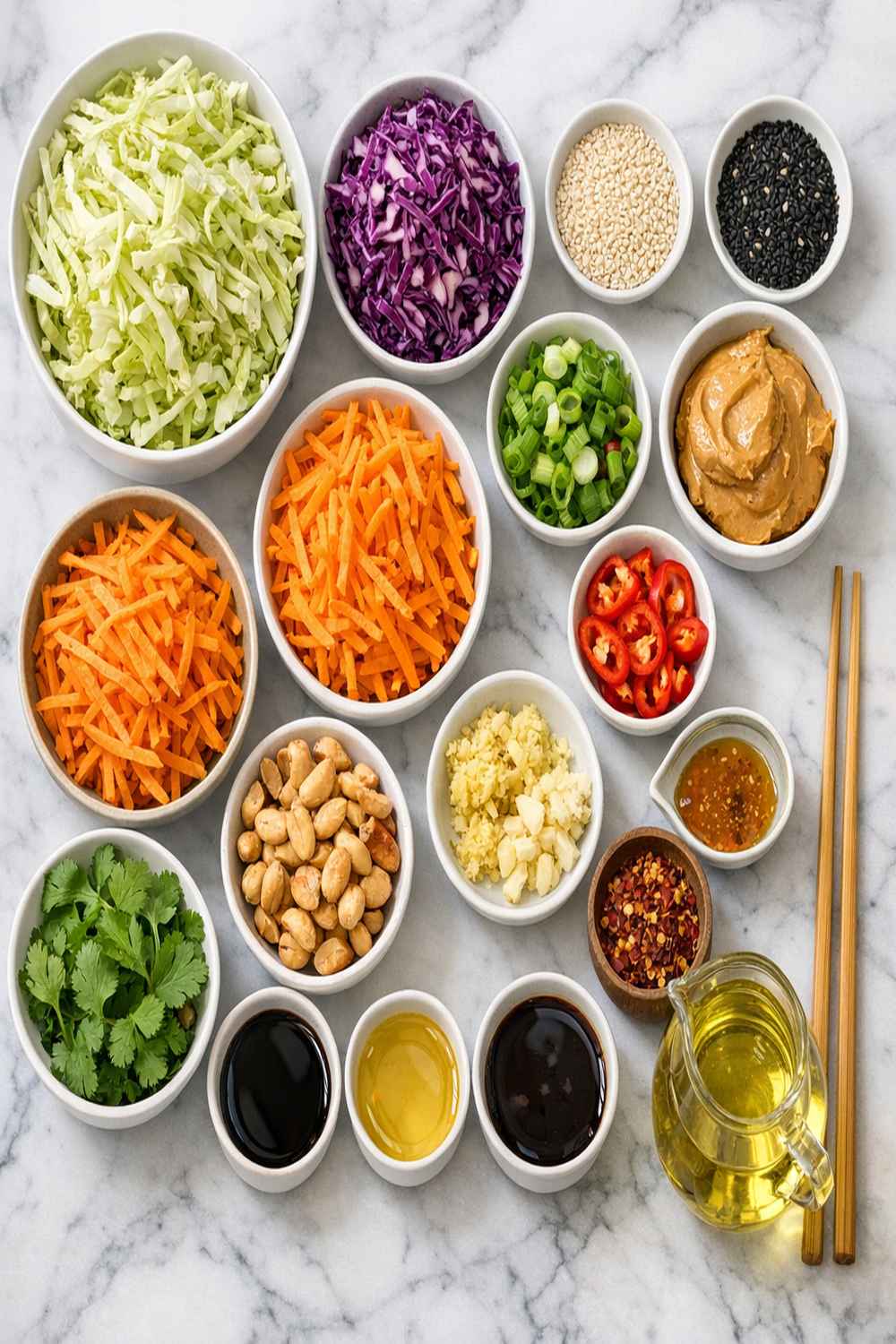
I’ve chosen each ingredient because it serves a specific purpose and delivers maximum nutrition without maxing out your grocery budget. When you buy these items strategically, this entire slaw costs less than three dollars to make and feeds four to six people as a side dish. That’s fifty cents per person. Let me break down why each ingredient earned its place in this recipe.
For the Slaw Base
- 2 to 2¼ pounds green cabbage (roughly 6 to 7 cups when shredded, choose heads that feel dense and heavy for their size)
- 1 cup fresh cilantro leaves (chopped, or substitute Italian parsley if cilantro isn’t available or you’re on a tight budget)
- 2 tablespoons toasted sesame seeds (for garnish and nutty finish)
- 3 scallions or green onions (sliced thin, white and light green parts included for maximum flavor)
- ½ cup roasted unsalted peanuts or cashews (crushed into small pieces, adds protein and crunch without breaking the bank)
For the Dressing
- 1 tablespoon soy sauce or coconut aminos (adds umami depth and saltiness in one ingredient)
- 3 tablespoons extra virgin olive oil (the base that carries all other flavors)
- ½ teaspoon red chili flakes or chili paste (optional—only add if your family enjoys heat)
- ½ teaspoon sea salt (adjust to taste based on how salty your soy sauce runs)
- 1 garlic clove, grated (or ½ teaspoon garlic paste—optional but adds punchy flavor that makes people ask what your secret is)
- 3 tablespoons honey, maple syrup, or coconut sugar (balances the acid and adds subtle sweetness without making it taste like dessert)
- 1 tablespoon fresh ginger, grated (or one teaspoon ginger paste if fresh isn’t available—ginger is what makes this taste authentically Asian)
- 1 to 3 teaspoons toasted sesame oil (start with one teaspoon—this is potent and builds as you taste)
- ¼ cup rice wine vinegar (the acid that brightens everything and keeps the slaw from tasting flat)
Why these exact ingredients? Olive oil and sesame oil together cost less than buying specialty Asian oils but deliver authentic flavor. Rice wine vinegar is incredibly affordable in bulk sections or Asian markets—I buy a large bottle for five dollars that lasts two months. Ginger and garlic are non-negotiables for Asian cuisine but you only need small amounts. A one-dollar piece of fresh ginger makes six batches of this slaw. These are the kinds of stretching-the-dollar decisions my grandmother taught me, and they work just as well today.
Step-by-Step: How to Make Asian Coleslaw Recipe Without Fail
I’m going to walk you through this with the confidence that comes from making it hundreds of times. There’s no guesswork here—just clear steps that build on each other. Once you make this once, you’ll be able to do it without thinking.
Step 1: Prepare Your Cabbage Properly
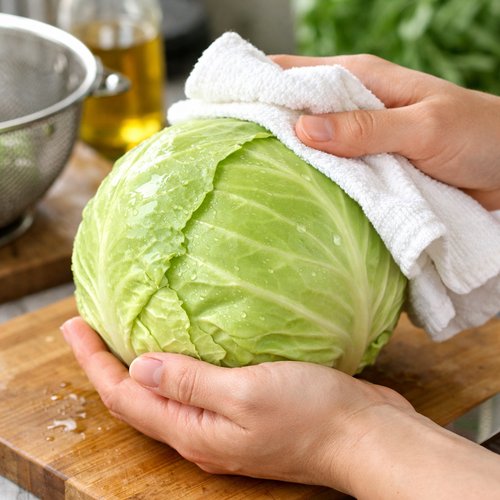
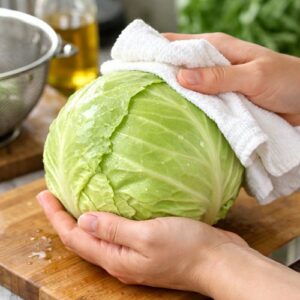
Start by removing any yellowed or damaged outer leaves from your cabbage head. Rinse the head under cold water and pat it completely dry—moisture is the enemy of crispy slaw. Using a sharp chef’s knife, cut the cabbage in half from top to root. Place the flat side down on your cutting board (this keeps it stable and safe). Slice off the core at an angle. Now, slice the cabbage into the thinnest ribbons you can manage—thinner than you think necessary. This is where a mandoline truly shines if you have one, but a sharp knife works beautifully too. You’re aiming for pieces roughly the size of a matchstick or thinner. Place all your shredded cabbage into a large mixing bowl. You should have approximately six to seven cups. Don’t pack it down.
Step 2: Add Your Fresh Aromatics and Herbs
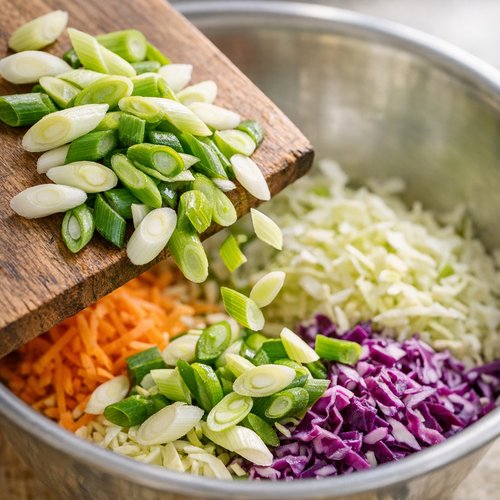
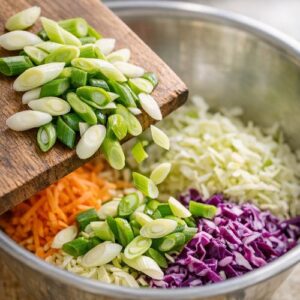
Slice your scallions at a slight angle, using both the white and light green parts (save the dark green tops as garnish if you want). Add these to your cabbage bowl. Now chop your cilantro—if you’re using parsley instead, that’s perfectly fine and often cheaper. The herb’s job is to add freshness and complexity. Add the cilantro directly to the cabbage and scallions. Gently toss everything together with your hands or two forks. This initial mixing distributes the herbs throughout so you get a little in every bite. Set this bowl aside while you make your dressing.
Step 3: Create Your Dressing in a Separate Bowl
Pour your three tablespoons of olive oil into a small mixing bowl or a jar with a tight lid. Add the rice wine vinegar next. Now—and this is important—whisk or shake these together first before adding anything else. This emulsifies them slightly and creates a better base. Add your honey or maple syrup (I prefer honey because it’s usually cheaper). Stir until the sweetener dissolves. Add your soy sauce or coconut aminos. Now add your minced or grated ginger and garlic if using. Finally, add your salt and any chili flakes. Start with just one teaspoon of the sesame oil at this point. Sesame oil is potent, and you want to taste first before committing to more. Whisk or shake everything together vigorously until combined. The dressing should smell intensely aromatic—ginger-forward with a sweet-savory balance.
Step 4: Combine and Taste
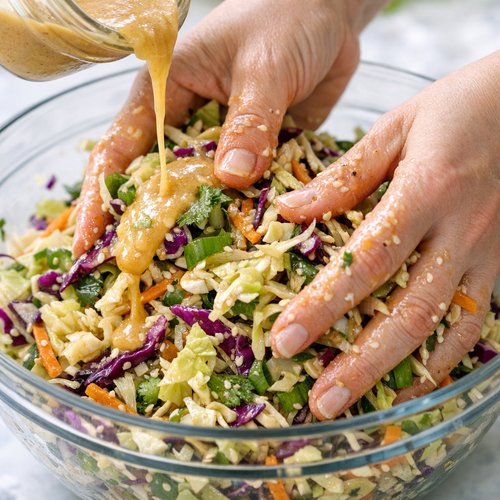
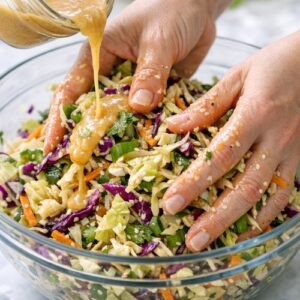
Pour your dressing over the cabbage mixture. Using two forks or your hands (I use my hands for better control), toss everything together for about one minute. This isn’t gentle—you want the dressing to coat every piece of cabbage. The cabbage will begin to release a tiny amount of liquid, which is exactly what you want. It means the dressing is penetrating the leaves. Taste a forkful. This is your moment to adjust. Does it need more sweetness? Add a touch more honey. Does it taste flat? Add a pinch more salt. Does it need more Asian flavor? Add another half teaspoon of sesame oil and toss again. Taste once more. You should taste the brightness of vinegar, the warmth of ginger, the savory depth of soy, and the nuttiness of sesame balanced with the sweetness of honey. If any one flavor is overwhelming, you can adjust.
Step 5: Finish With Texture and Garnish
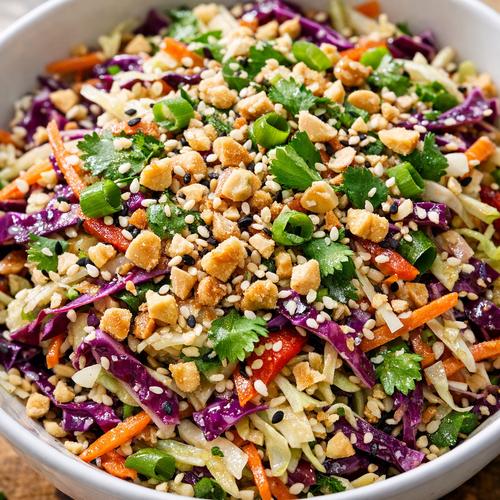
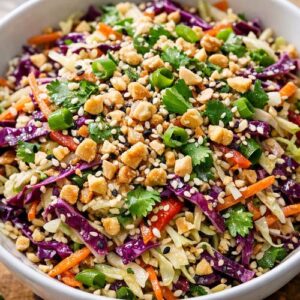
Crush your peanuts or cashews into roughly dime-sized pieces—not a powder, but not whole either. Sprinkle these over the top of your slaw along with your toasted sesame seeds. If you saved those dark green scallion tops, scatter them on top too. Don’t stir these in yet. Let them sit on top so they stay crunchy. This is the presentation. Now, at this exact moment, your coleslaw is at peak crispness and flavor. Serve it immediately, or if you’re making it ahead, wait to add the nuts and seeds until just before serving.
The Most Common Mistakes (And How to Avoid Them)
- Over-dressing the cabbage – the most frequent mistake I see is people who make too much dressing or pour it all at once. Start with three-quarters of your dressing, toss well, taste, then add more if needed. Extra dressing pools at the bottom and makes the slaw soggy. Leftover dressing keeps in the refrigerator for a week and works beautifully on other salads.
- Using pre-shredded cabbage – yes, it costs more, but the real problem is that pre-shredded cabbage has already begun to oxidize and break down before you even open the bag. It absorbs dressing unevenly and turns mushy within hours. Shredding your own takes eight minutes and costs one-third as much.
- Skipping the taste-and-adjust step – every batch of soy sauce and every batch of ginger is slightly different in intensity. Your honey might crystallize slightly differently than mine. Tasting and adjusting takes thirty seconds and is the difference between “nice coleslaw” and “where did you get this restaurant recipe?”
How Do I Know When It’s Done?
You’ll know your Asian coleslaw is ready when the cabbage has softened just slightly but still has a audible crunch when you bite into it. This typically happens two to three minutes after dressing. The color should be bright—the green cabbage should still look vibrant green, not dull or translucent. The dressing should coat every piece evenly with a glossy shine. When you take a bite, you should taste sweetness, saltiness, tartness, and spice all at once—not one flavor dominating. The herbs should be visible throughout, and the sesame seeds and nuts should feel distinctly crunchy, providing textural contrast to the tender cabbage.
If you’re serving this immediately, eat within the first thirty minutes while the nuts and seeds are at their crunchiest. If you’re making it ahead for meal prep, cover it and refrigerate. The coleslaw will continue to soften as it sits, but the flavor actually deepens and becomes more cohesive. This is a case where sitting overnight makes the dish better, not worse.
Troubleshooting: When Things Go Wrong
- The slaw tastes flat and one-dimensional – the problem is almost always insufficient salt or the sesame oil isn’t present enough. Start by adding a small pinch of salt and whisking it in. Taste again. If that helps but it’s still not quite right, add half a teaspoon more sesame oil. You want to taste nutty toasted flavor underneath everything else.
- The cabbage tastes watery or mushy – this usually means either your cabbage was already old when you bought it (check the weight—a fresh head feels dense and heavy), or you dressed it too long before serving (if serving within two hours, dress just before eating; if serving later, dress only one hour before). For make-ahead meal prep, keep the dressing separate and combine the morning you want to eat it.
- The dressing separated or looks oily – sesame oil can separate if your bowl is too cold or if you used too much. Whisk vigorously again right before serving. If you used more than three teaspoons of sesame oil total, you’ve overdone it—this is a potent ingredient and dominates quickly.
Can I Store Asian Coleslaw Recipe?
Yes, and this is where this recipe becomes a weeknight lifesaver. If you keep the components separate, shredded cabbage stays fresh in an airtight container for up to five days in the refrigerator. The dressing keeps in a jar for up to two weeks. Combine them the morning you want to eat it, add your nuts and seeds just before serving, and you have a restaurant-quality side dish ready in two minutes. If you combine everything at once, the coleslaw keeps for three days in the refrigerator in an airtight container, and honestly, it tastes better on day two because the flavors have time to marry. The cabbage will soften slightly, but it remains pleasant to eat. The nuts and seeds will soften too if left in the dressing, so if you’re making ahead and combining everything, add fresh nuts and seeds right before serving.
To store: transfer to a glass container with a fitted lid. Keep the dressing and solid components together—they should stay together. Don’t store at room temperature; cold temperatures slow oxidation and keep everything fresher longer.
Nutrition Information
This recipe makes approximately four to six servings, depending on portion size. Per serving (based on six servings): approximately 180 calories, 12 grams fat, 18 grams carbohydrates, 4 grams protein, and 3 grams fiber. The USDA notes that cabbage is nutrient-dense and low in calories—one cup of shredded raw cabbage contains only 22 calories but delivers 2 grams of fiber and significant amounts of vitamin C and vitamin K. When you add the ginger, you’re adding anti-inflammatory compounds called gingerols that research suggests may help with digestive comfort. The sesame seeds provide calcium and magnesium, nutrients many people don’t get enough of. The peanuts or cashews add plant-based protein. This isn’t just a side dish. This is real nutrition disguised as something delicious.
Expert’s Nutritional Tip
As a registered dietitian, I’ve learned that one of the biggest barriers to healthy eating is that nutritious food feels boring. This coleslaw solves that problem. The combination of textures—soft cabbage, crunchy nuts, slippery sesame seeds—engages multiple sensory experiences. The layers of flavor mean your brain registers this as a “real meal,” not a salad you’re forcing down. From a practical standpoint, this is a slaw that people actually want to eat, which means it gets made regularly, which means your family is regularly consuming raw cruciferous vegetables. That consistency matters more than perfection.
Make-Ahead Guide
This is the recipe I recommend for Sunday meal prep. Here’s my exact process: On Sunday afternoon, I shred four pounds of cabbage (making two double batches), toss it gently with six sliced scallions and two cups of cilantro, and divide it between two airtight containers. In a separate mason jar, I whisk together my dressing and label it with the date. Come Monday through Wednesday morning, I can assemble this side dish in ninety seconds—just pull out a container, add three tablespoons of dressing, toss, top with nuts and seeds, and serve. This works alongside any protein. It’s particularly stunning alongside BBQ chicken or grilled fish. The dressing also works beautifully on other vegetables—I’ve drizzled it over roasted Brussels sprouts and steamed broccoli with remarkable success.
Seasonal Variations
Spring: Add thinly sliced radishes and fresh mint alongside the cilantro. The radishes add peppery crunch and stay crisp longer than cabbage.
Summer: Include diced mango or peaches for a tropical twist. The sweetness of fruit plays beautifully against the savory dressing. Add these just before serving so they don’t get soggy.
Fall: Add thinly sliced apple (toss it in a bit of lemon juice first to prevent browning) and substitute half your cilantro with mint. The apple adds sweetness that bridges fall flavors.
Winter: Increase the ginger amount to one and a half tablespoons and add a pinch of white pepper. The warmth of extra ginger feels comforting during cold months. You can also add thinly sliced green onions’ white parts roasted until they’re slightly caramelized.
What Can I Serve With Asian Coleslaw Recipe?
This coleslaw isn’t picky. It pairs with virtually any protein and most grains. The cool, crunchy, slightly spicy profile works particularly well alongside warm, rich mains. It’s a perfect side for stir-fries—in fact, this is the exact slaw I serve alongside basic stir-fry recipe beef. The dressing flavors echo each other, creating a cohesive meal. It’s equally stunning alongside grilled chicken, roasted pork, or baked salmon. I’ve also served it as part of a mezze platter with hummus and pita, and I’ve used it as the slaw component of banh mi-inspired bowls over rice with roasted vegetables. The possibilities are genuinely endless.
- Stir-fried proteins – the fresh slaw cools the heat of stir-fry and provides textural contrast to soft-cooked vegetables
- Grilled or roasted meats – the acidity of the dressing cuts through richness and aids digestion
- Rice bowls – layer this coleslaw over grains with a protein and roasted vegetables for a balanced, complete meal
- Asian-inspired tacos – use this slaw in place of traditional coleslaw in fish tacos or pulled pork tacos for an unexpected flavor profile
- Grain bowls – this works beautifully over quinoa, farro, or brown rice with roasted tofu or chickpeas

Asian Coleslaw Recipe
Ingredients
Method
- Start by removing any yellowed or damaged outer leaves from your cabbage head. Rinse the head under cold water and pat it completely dry—moisture is the enemy of crispy slaw. Using a sharp chef's knife, cut the cabbage in half from top to root. Place the flat side down on your cutting board (this keeps it stable and safe). Slice off the core at an angle. Now, slice the cabbage into the thinnest ribbons you can manage—thinner than you think necessary. This is where a mandoline truly shines if you have one, but a sharp knife works beautifully too. You're aiming for pieces roughly the size of a matchstick or thinner. Place all your shredded cabbage into a large mixing bowl. You should have approximately six to seven cups. Don't pack it down.
- Slice your scallions at a slight angle, using both the white and light green parts (save the dark green tops as garnish if you want). Add these to your cabbage bowl. Now chop your cilantro—if you're using parsley instead, that's perfectly fine and often cheaper. The herb's job is to add freshness and complexity. Add the cilantro directly to the cabbage and scallions. Gently toss everything together with your hands or two forks. This initial mixing distributes the herbs throughout so you get a little in every bite. Set this bowl aside while you make your dressing.
- Pour your three tablespoons of olive oil into a small mixing bowl or a jar with a tight lid. Add the rice wine vinegar next. Now—and this is important—whisk or shake these together first before adding anything else. This emulsifies them slightly and creates a better base. Add your honey or maple syrup (I prefer honey because it's usually cheaper). Stir until the sweetener dissolves. Add your soy sauce or coconut aminos. Now add your minced or grated ginger and garlic if using. Finally, add your salt and any chili flakes. Start with just one teaspoon of the sesame oil at this point. Sesame oil is potent, and you want to taste first before committing to more. Whisk or shake everything together vigorously until combined. The dressing should smell intensely aromatic—ginger-forward with a sweet-savory balance.
- Pour your dressing over the cabbage mixture. Using two forks or your hands (I use my hands for better control), toss everything together for about one minute. This isn't gentle—you want the dressing to coat every piece of cabbage. The cabbage will begin to release a tiny amount of liquid, which is exactly what you want. It means the dressing is penetrating the leaves. Taste a forkful. This is your moment to adjust. Does it need more sweetness? Add a touch more honey. Does it taste flat? Add a pinch more salt. Does it need more Asian flavor? Add another half teaspoon of sesame oil and toss again. Taste once more. You should taste the brightness of vinegar, the warmth of ginger, the savory depth of soy, and the nuttiness of sesame balanced with the sweetness of honey. If any one flavor is overwhelming, you can adjust.
- Crush your peanuts or cashews into roughly dime-sized pieces—not a powder, but not whole either. Sprinkle these over the top of your slaw along with your toasted sesame seeds. If you saved those dark green scallion tops, scatter them on top too. Don't stir these in yet. Let them sit on top so they stay crunchy. This is the presentation. Now, at this exact moment, your coleslaw is at peak crispness and flavor. Serve it immediately, or if you're making it ahead, wait to add the nuts and seeds until just before serving.
Notes
FAQs
Can I use napa cabbage instead of green cabbage?
You can, but I wouldn’t recommend it if budget is your concern. Napa cabbage costs more and has a much more delicate structure. It wilts quickly and doesn’t stay crisp as long. If that’s all you have available, use it—the flavor will still be good—but you’ll need to eat it within a day and dress it much closer to serving time. Green cabbage is genuinely the better choice here.
What if I don’t have rice wine vinegar?
You can substitute regular white vinegar using slightly less (start with three tablespoons instead of four)—white vinegar is harsher and more intense. You can also use apple cider vinegar if that’s what you have, which actually adds a nice subtle sweetness. Avoid balsamic or red wine vinegar as they’ll turn the slaw dark. Rice wine vinegar is so affordable that I’d recommend keeping a bottle on hand—it’s one of those ingredients that justifies its shelf space by showing up in dozens of recipes.
Is there a way to make this coleslaw without nuts for a nut allergy?
Absolutely. Skip the peanuts or cashews and add toasted sunflower seeds instead for crunch and nutrition. You can also add crispy fried onions, which provide that textural contrast people crave. Another option is to use roasted chickpeas crushed into pieces. The key is having something crunchy to balance the tender cabbage.
Can I make this coleslaw gluten-free?
Yes, easily. The only ingredient that might contain gluten is soy sauce. Simply use tamari or coconut aminos (which I’ve already listed as an alternative in the recipe). Everything else is naturally gluten-free. Make sure your sesame seeds and nuts are from a source where there’s no cross-contamination if you’re managing celiac disease or severe gluten sensitivity.
How spicy is this coleslaw with the chili flakes?
Not very spicy at all with the half teaspoon I recommend. It’s more of a gentle warmth that builds slowly. If your family enjoys heat, you can increase to one teaspoon. If you’re serving this to people who avoid spicy food entirely, just omit the chili flakes completely—the coleslaw is delicious without them. The other flavors (ginger, sesame, vinegar) carry all the complexity.
More Recipes You’ll Love
- Beef Stir-Fry Recipe – pairs beautifully with this coleslaw as a complete meal
- BBQ Chicken Recipe Boneless Breast – the slaw cools the richness of BBQ sauce perfectly
- my favorite salad – another budget-friendly raw vegetable salad with different flavor profiles worth exploring
- Baguette Appetizer Recipe – perfect for serving alongside this coleslaw at casual gatherings
You now have everything you need to make an Asian coleslaw that tastes like it came from a restaurant kitchen but costs less than ordering takeout. More importantly, you understand the why behind each step. You know why we shred our own cabbage, why we taste and adjust, why we keep nuts separate until serving. That knowledge means you can adapt this recipe forever—changing it with the seasons, stretching it further by reducing the nuts, or making it spicier for different palates. This is how my grandmother taught me to cook: with understanding, not just instructions. That understanding is what makes a recipe yours. Happy Cooking!