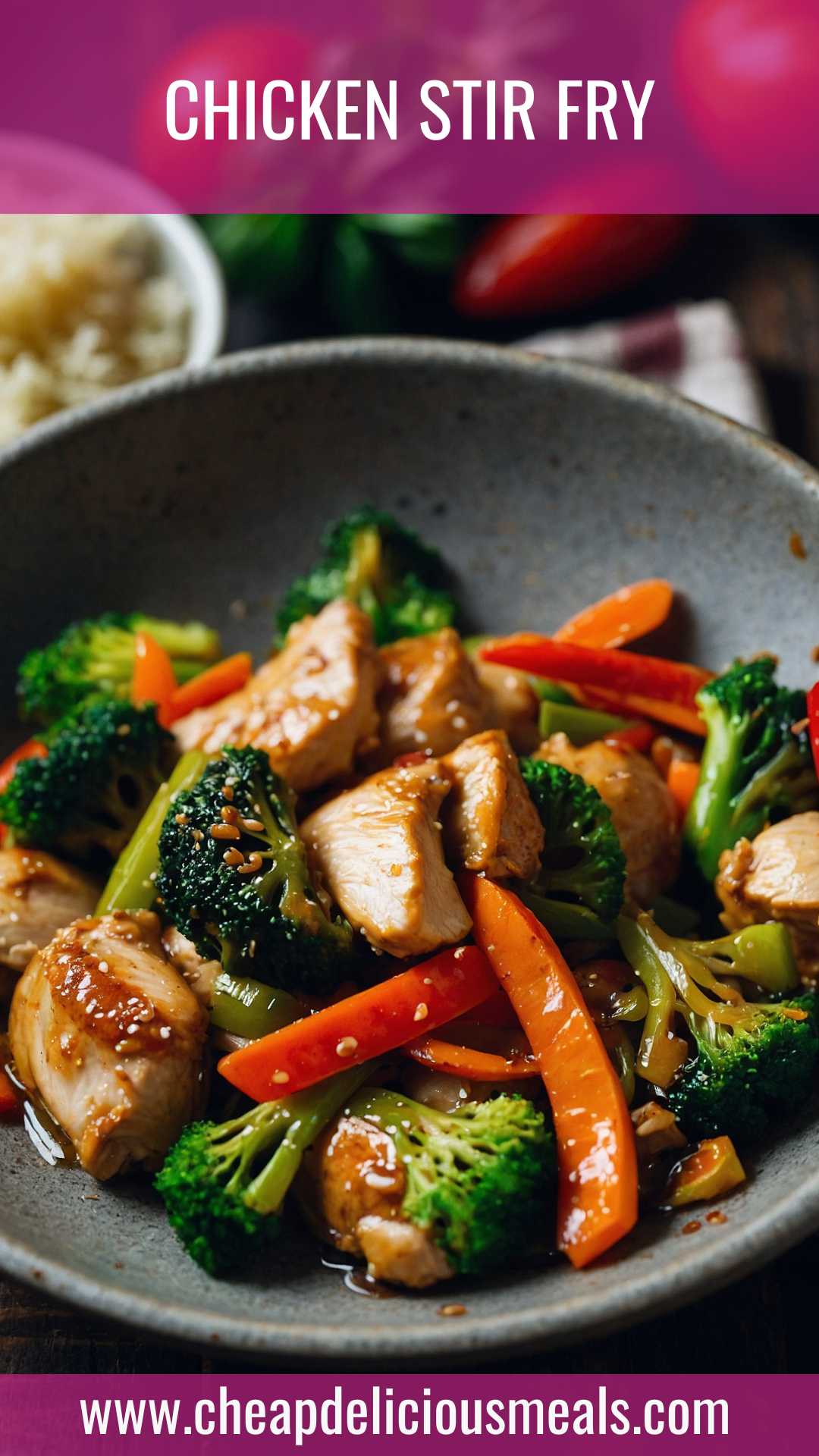
Ingredients
Method
Step 1: Prepare Your Ingredients
- Before starting, gather all your ingredients. Chop the chicken and veggies into bite-sized pieces. This prevents any last-minute slicing. Measure the sauce ingredients so you're ready to go when it's cooking time. Prepping is key; it keeps everything flowing smoothly.
Step 2: Create the Sauce
- In a small bowl, whisk together the chicken broth, cold water, cornstarch, sesame oil, honey, rice vinegar, soy sauce, and crushed red pepper flakes. This sauce is where the magic happens—it pulls everything together with flavor.
Step 3: Heat the Oil
- In a large skillet or wok, heat 1 tablespoon of olive oil over medium-high heat until it shimmers. Ensure the surface is hot enough before proceeding. A hot pan ensures searing—if your oil isn't shimmering, wait a bit longer.
Step 4: Cook the Chicken
- Add the diced chicken to the pan. Season it with salt and pepper. Stir occasionally, allowing the chicken to brown slightly. This should take about 5-7 minutes. You want each piece to be cooked through without overdoing it.
Step 5: Incorporate the Veggies
- Once the chicken is barely cooked through, add in the broccoli, bell peppers, carrots, ginger, and garlic. Sauté for another 3-5 minutes until the vegetables are tender-crisp. The colors should brighten, making it visually appealing.
Step 6: Add the Sauce
- Pour the prepared sauce over the chicken and vegetable mixture. Stir well to ensure everything is evenly coated. Cook for an additional couple of minutes to let the sauce thicken slightly. The cornstarch will do its job here, creating a glossy finish.
Step 7: Serve and Garnish
- Once everything is coated and the sauce has thickened, remove from heat. Serve hot, garnished with chopped green onions for that fresh crunch. Dive right in; the meal is complete!
Notes
1. Use a Wok: If you have one, it gets hotter and cooks food faster. This gives you that authentic stir-fry flavor.
2. High Heat: Keep the heat high throughout cooking. It helps to seal in those juices, resulting in tender meat.
3. Do Not Overcrowd the Pan: If cooking a large batch, do it in batches. Overcrowding leads to steaming rather than stir-frying.
4. Fresh Veggies: The fresher your ingredients, the better the taste. Always opt for seasonal vegetables for optimal flavor.
5. Experiment with Sauces: Don’t be afraid to try different sauces. Teriyaki and oyster sauce can add another layer of flavor.
2. High Heat: Keep the heat high throughout cooking. It helps to seal in those juices, resulting in tender meat.
3. Do Not Overcrowd the Pan: If cooking a large batch, do it in batches. Overcrowding leads to steaming rather than stir-frying.
4. Fresh Veggies: The fresher your ingredients, the better the taste. Always opt for seasonal vegetables for optimal flavor.
5. Experiment with Sauces: Don’t be afraid to try different sauces. Teriyaki and oyster sauce can add another layer of flavor.