This post contains affiliate links. As an Amazon Associate I earn from qualifying purchases.
If you’ve always wanted to make a baked noodle casserole but felt intimidated by layering, timing, or Asian cooking techniques, this is your starting point. I’m going to walk you through every single step like you’re sitting in my kitchen right here in Indiana. This dish feeds a family on less than what you’d spend grabbing takeout, tastes just as good, and teaches you skills you’ll use in the kitchen forever. If casseroles feel too complicated and stir-fries make you nervous, this baked noodle recipe splits the difference perfectly—it’s forgiving, it’s flexible, and it honestly tastes better the next day. You’re going to feel so proud of yourself when you pull this out of the oven.
How to Make Baked Noodles for the First Time (You’ve Got This)
My first attempt at baking noodles happened on a Tuesday night when my budget was tight and my energy was tighter. I was terrified the noodles would turn into mush or stay crunchy or somehow separate into a watery mess. I remember standing in front of my oven thinking, “What if this doesn’t work?” But something clicked when I realized baking noodles isn’t actually harder than boiling them—it just looks fancier and tastes more intentional. That first casserole came out golden, the noodles held their shape, the vegetables stayed colorful, and my family asked for seconds. That’s when I knew this wasn’t a fancy technique. It was just smart cooking.
What to Expect Before You Start
This recipe takes about 35 minutes total—roughly 10 minutes of prep work (chopping vegetables), 5 minutes to coat the noodles, 20 minutes in the oven, and 5 minutes of resting time. The difficulty level is genuinely beginner-friendly because there’s no flipping, no stirring halfway through, and no worrying about timing down to the second. Your oven does most of the work. What success looks like: tender noodles that still have a little bite to them, vegetables that are soft but not mushy, and a sauce that’s absorbed into everything without being wet or soupy.
- Noodle texture takes confidence. Many first-timers worry their noodles will turn to mush. They won’t. Glass noodles hold their structure beautifully during baking, and the liquid is measured specifically so nothing gets soggy. You’ll see the difference between undercooked and perfectly done after your first batch—it’s actually obvious.
- Vegetable prep feels like the hardest part, but it’s really just cutting. You don’t need perfect knife skills. Your vegetables don’t need to be uniform. Bigger pieces take a few minutes longer to soften; smaller pieces soften faster. Either way, they turn out delicious. This teaches you that “rustic” cutting is perfectly acceptable and honestly more budget-friendly because you waste less.
- The sauce comes together in one bowl. No complicated techniques here. You’re literally whisking together five ingredients. If you’ve ever made salad dressing, you can do this.
Equipment You’ll Need (And What You Can Skip)
You need very little to make this work, and I’m guessing you already own most of it. Fancy casserole dishes are nice but unnecessary. A 12-inch round baking dish works perfectly. A square 9×13 dish also works. Even an old cake pan works if you don’t have anything else. The point is just that you need something with sides that can hold liquid, fit in your oven, and handle direct heat.
- A 12-inch round casserole dish with a lid. This is the only tool that really matters. The lid traps steam and prevents the edges from drying out. If you don’t have a lid, you can cover the dish tightly with aluminum foil—it works just as well and costs practically nothing.
- A whisk or fork. You need something to mix the sauce ingredients together until smooth. A fork works fine. So does a spoon if that’s all you have.
- A sharp knife for chopping vegetables. Any kitchen knife you own works. Dull knives are actually more dangerous because they slip. If your knife feels dull, run it along a ceramic mug’s rough bottom edge a few times—seriously, this works and costs zero dollars.
- A grater for the ginger (optional but helpful). You can also mince ginger with a knife. A microplane grater is nice because ginger shreds finely, but it’s absolutely not required. I’ve minced ginger by hand for years and it turned out great.
- A measuring cup and spoons. Budget kitchens need these for any recipe to turn out right. Eyeballing amounts is how recipes fail. Measuring tools are cheap insurance.
The Ingredients—A Beginner’s Shopping Guide
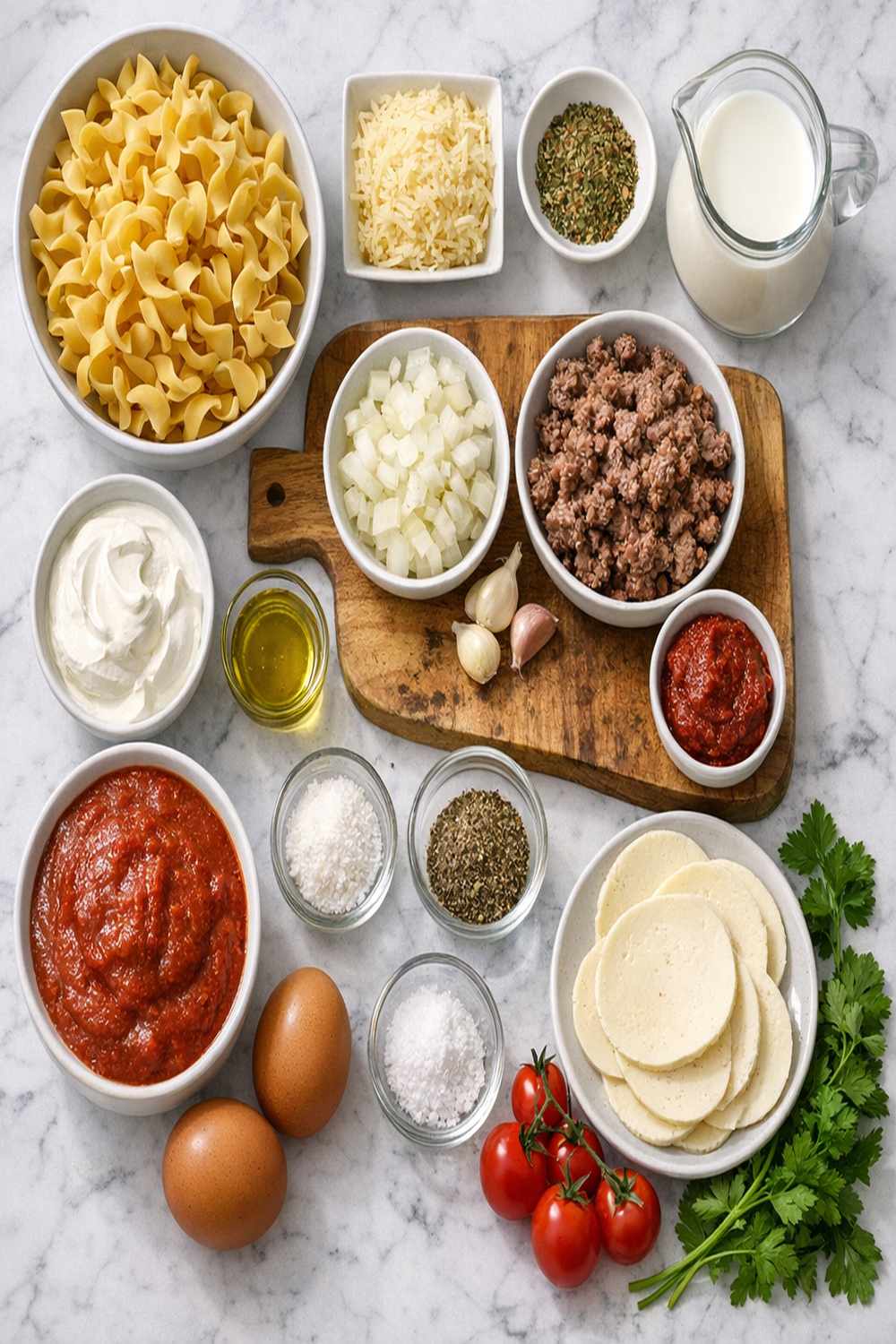
Here’s what I want you to know about shopping for this recipe: buy vegetables when they’re on sale, not when the recipe calls for them. This casserole is incredibly flexible with swaps. Carrots on sale? Buy them. Broccoli looking tired? Grab bok choy instead. My family traditions taught me that smart shopping means building a meal around what’s affordable that week, not the other way around. I’ve included exactly where to find each ingredient and what to look for so you walk into the grocery store knowing exactly what you’re hunting for.
- 1 cup carrots (julienned or cut into thin matchsticks—buy the cheapest carrots you can find, whether that’s a 2-pound bag or loose carrots; they soften perfectly during baking)
- 1½ cups fresh broccoli florets (cut small—buy whole broccoli crowns when they’re on sale and you’ll save at least a dollar compared to pre-cut florets; the tough stems can be peeled and used in soups)
- 2 tablespoons sesame seeds (found in the spice aisle or international section—optional for garnish but adds nutty flavor and costs just a couple dollars for a jar that lasts months)
- 1½ cups button or cremini mushrooms (sliced thin—look for firm mushrooms without dark spots, usually found in the produce section near lettuce; cremini are heartier and slightly cheaper than fancy varieties)
- ½ cup coconut milk (full-fat or light both work; look for this in the international foods aisle; one can goes a long way)
- ½ medium onion (sliced into half-moons—buy the cheapest yellow onions; sweet onions cost more and aren’t necessary here)
- 4 cloves fresh garlic (crushed—buy a whole bulb rather than minced in a jar; one bulb costs less than a dollar and provides garlic for multiple meals)
- 2½ cups water (you likely have this already)
- 200 grams glass vermicelli noodles (about 5 individual nests if you can find them sold that way—look for these in the Asian foods aisle; they’re usually next to rice noodles and cost just a couple dollars for a whole box)
- ¼ cup soy sauce (use gluten-free if you need to—buy the cheaper bottle; fancy brands taste identical in cooked dishes; store-brand works beautifully)
- ¼ teaspoon salt (plus more to taste—you probably own salt)
- ¼ cup green onion (slivered—buy a bunch; green onions last two weeks in the refrigerator wrapped in plastic)
- 1 cup extra-firm tofu (drained and cubed—buy the extra-firm block, never silken; press it between paper towels for 10 minutes to remove excess water; one block usually costs $1.50 to $2.50 and provides plant-based protein that stretches your grocery budget)
- 2 cups Asian greens like bok choy or choy sum (sliced—these are often on sale in the produce section; if you can’t find them, regular cabbage works perfectly and costs even less)
- 1 tablespoon pure maple syrup (or honey works too—this just adds a touch of sweetness to balance the salty-spicy flavors)
- 1½ inches fresh ginger (grated—a small piece of ginger root costs just pennies and lasts weeks in the refrigerator wrapped in a paper towel)
Pro shopping tip from my years managing a tight food budget: Buy vegetables that are in season and on sale that week. In winter, root vegetables and hardy greens like bok choy are cheapest. In spring and summer, broccoli and fresh onions drop in price. Build this meal around whatever’s on sale. The casserole literally tastes the same whether you use the exact vegetables listed or swap in what’s affordable.
Step-by-Step: Your First Baked Noodle Casserole
I’m going to hold your hand through every single step. Read each instruction fully before you start. Gather all your ingredients on the counter. Once you see how simple this actually is, you’re going to wonder why you ever thought it was complicated.
Step 1: Prep All Your Vegetables (Do This First)
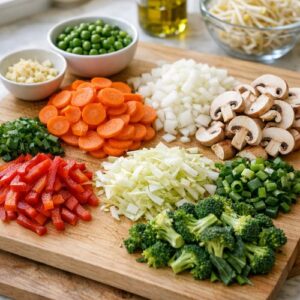
Before you touch the oven, prepare every single vegetable. This is called “mise en place” (French cooking term meaning “everything in its place”). It sounds fancy but it just means “get organized.” Wash your mushrooms under running water and pat them dry with a paper towel—wet mushrooms won’t brown as nicely. Slice them into thin pieces about ¼-inch thick. Wash your carrots, peel them if the skin looks thick, and cut them into matchstick pieces about 2 inches long and as thin as a toothpick. Cut your broccoli into small florets about the size of your thumbnail. Slice your onion in half, lay it flat on your cutting board, and slice it into half-moon shapes. Wash your bok choy and slice it into ½-inch pieces. Measure your tofu, press it between paper towels to squeeze out excess water, then cut it into small cubes about the size of dice. Mince or crush your garlic cloves. Grate your ginger. Slice your green onion into thin ribbons. Do this all now, on the same cutting board, and your actual cooking becomes incredibly fast.
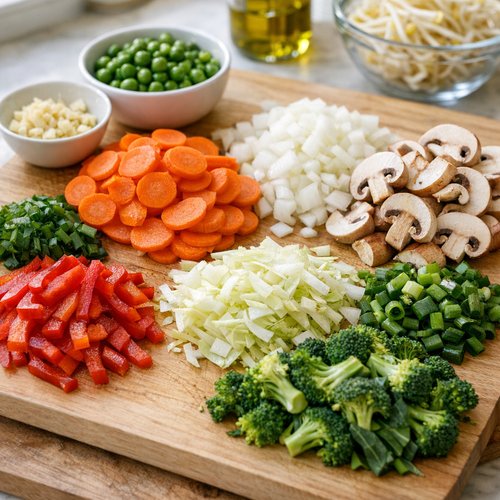
Why this matters for beginners: When everything is prepped, the actual baking takes just minutes. You won’t be rushing. You won’t be stressed. You’ll feel in control.
Step 2: Preheat Your Oven and Prepare Your Dish
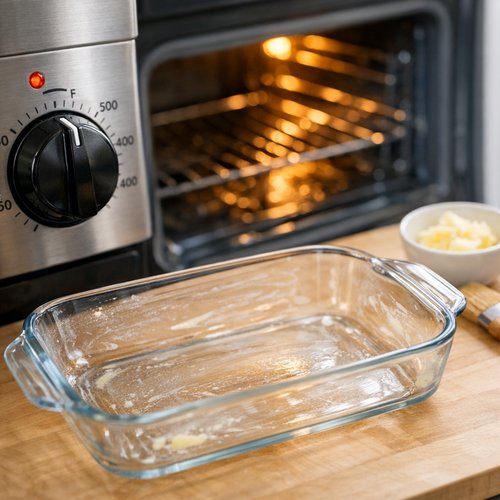
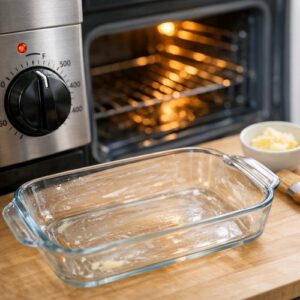
Turn your oven to 374°F (190°C). If you don’t have an oven thermometer (which is fine—most people don’t), just trust your oven’s dial. While the oven preheats, take your 12-inch casserole dish and make sure it’s clean and dry. Set it on your counter. Make sure you have the lid nearby. The oven will take about 10-15 minutes to fully preheat. You’ll know it’s ready when it beeps or dings, or when the heating element stops glowing red. Don’t skip the preheating step—a preheated oven is what allows your noodles to soften evenly and your vegetables to roast rather than steam.
Step 3: Make Your Sauce and Coat the Noodles
In a medium mixing bowl, pour your 2½ cups of water. Add your ¼ cup soy sauce, ½ cup coconut milk, 1 tablespoon maple syrup, and ¼ teaspoon salt. Grab a whisk or fork and stir these ingredients together until the maple syrup dissolves completely and everything looks smooth and combined. The mixture won’t be perfectly uniform—that’s okay. You’re not trying to make it look like a single liquid; you’re just mixing it together. Now add your glass noodles directly to this sauce. Using your hands or two forks, gently loosen the noodles and submerge them in the liquid. They’ll start to soften immediately. Wait about 1 minute, then flip the noodles over and gently press them down so they’re all moistened. Don’t break them or stir aggressively. You’re just coating them, not cooking them yet. This step ensures the noodles soak up flavor from the sauce rather than staying plain.
What this feels like: The noodles will be slightly floppy but still mostly crunchy. That’s exactly right. They’ll continue to soften in the oven.
Step 4: Transfer Noodles to Your Casserole Dish
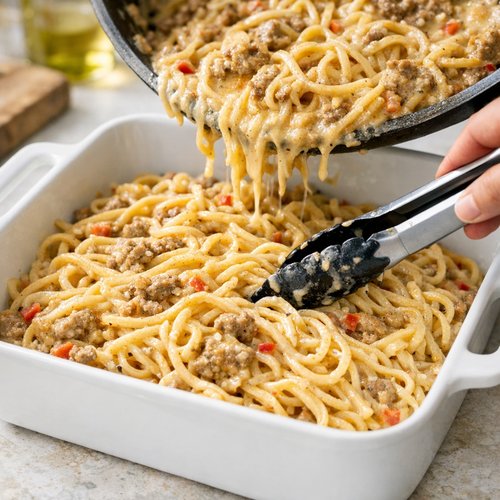
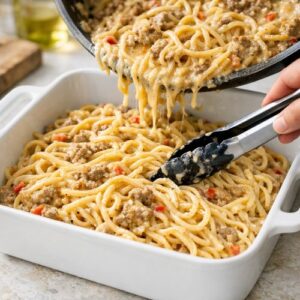
Pour the noodles and all the sauce into your casserole dish. Use your hands or a pair of tongs to spread them into a relatively even layer across the bottom. Don’t worry about perfection. The noodles don’t need to look neat. They’re going to shift around anyway. Just make sure the sauce is distributed throughout so the noodles aren’t clumping together. This takes about 2 minutes of gentle arranging.
Step 5: Arrange Vegetables and Tofu Around the Noodles
Now comes the fun part—you get to arrange your vegetables like you’re creating a work of art. Scatter your mushroom slices around the noodles. Add your carrot matchsticks. Distribute your broccoli florets so they’re visible throughout the dish. Add your onion slices. Scatter your bok choy. Distribute your tofu cubes evenly. Here’s the secret: you’re not layering perfectly because everything is going to move and shift during baking. Just make sure every vegetable is touching the sauce at least a little bit. The vegetables near the edges will cook slightly faster, and vegetables in the center will cook slightly slower, but everything will finish at exactly the right time. This is actually why baked noodles are so forgiving for beginners—everything cooks together without you having to manage it.
Step 6: Cover and Bake for 20 Minutes
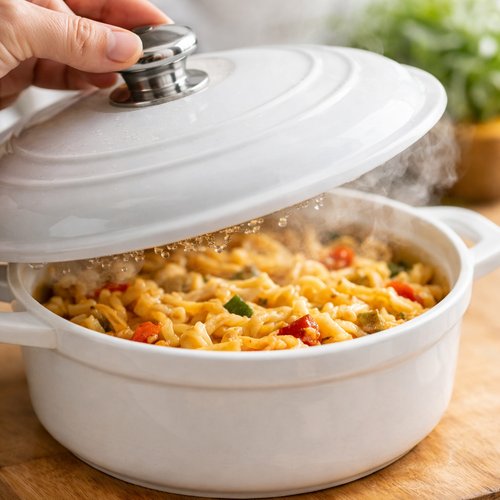
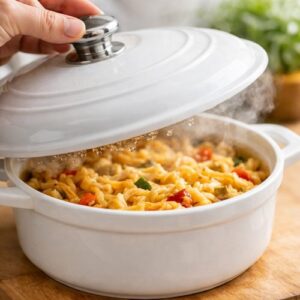
Place your lid on the casserole dish. The lid traps steam, which softens the noodles and vegetables perfectly. If you don’t have a lid, cover the dish tightly with aluminum foil. Slide the entire dish into your preheated oven. Set a timer for 20 minutes. This is when you can finally sit down. The oven is doing all the work now. You don’t need to stir, flip, or check on anything. Just wait. When the timer goes off, carefully remove the dish from the oven using oven mitts. Be careful—it’s hot and the steam is hot. Set it on your stovetop or a trivet.
Step 7: Rest, Toss, and Garnish
Leave the lid on for 5 minutes. This resting period lets the heat distribute evenly and lets the noodles finish absorbing any remaining liquid. After 5 minutes, remove the lid carefully (steam is hot!). Using two forks or a tongs and spoon, gently toss everything together. The noodles should be tender but still have a slight chew to them. The vegetables should be soft. The sauce should be mostly absorbed. If there’s still a lot of liquid in the bottom, don’t worry—some will absorb as it cools. Sprinkle your green onion slices over the top and scatter your sesame seeds everywhere. If you taste a bite, add a tiny pinch more salt if it needs it. This is totally normal—everyone’s oven runs differently and everyone’s taste buds are different.
How to Tell If You Did It Right
The moment you pull this out of the oven, you’ll know if you nailed it. Here’s exactly what success looks like:
- The noodles are tender but not mushy. When you bite one, it’s soft and easy to chew, but it doesn’t fall apart. It still has a little resistance. Think of the texture of regular pasta that’s been cooked just right—not crunchy, not limp, but in between.
- The vegetables are soft and deeply colored. Your broccoli should be dark green, not bright green. Your carrots should bend easily when you press them with a fork. Your mushrooms should look dark and shrunken compared to when you started. This is caramelization—it means they’ve released their water and concentrated their flavor.
- The sauce is mostly absorbed but the dish isn’t dry. When you toss the noodles, they should glide together easily. You might see just a tiny bit of liquid in the bottom, and that’s perfect. Completely dry means you overbaked it (and noodles can handle this—they’re still delicious). Super wet and soupy means you underbaked it or your vegetables released more liquid than expected.
- The whole kitchen smells like ginger, garlic, and nutty sesame. Seriously. Your nose will tell you if you nailed this before your mouth even tastes it.
What Went Wrong? Beginner Fixes
- Your noodles are still crunchy after baking. This usually happens because the noodles didn’t spend enough time in the sauce before baking. Next time, coat the noodles thoroughly and let them soak for 2-3 minutes before transferring to the casserole dish. The other reason is that your oven might run cool—try baking for 25 minutes instead of 20. Every oven is different, and this is totally normal.
- Your noodles turned to mush. This is actually harder to do than you’d think with glass noodles, but it happens if you overbaked. Next time, check at 15 minutes instead of waiting the full 20. If they’re tender at 15 minutes, take them out. Mush is still delicious, honestly—it’s not a failure, it’s just a softer texture. Some people prefer it this way.
- The bottom is watery and the top is dry. This means your vegetables released a lot of liquid (totally normal with mushrooms and bok choy) but the noodles didn’t absorb it all. Next time, let it rest uncovered for 5 extra minutes after baking so more liquid evaporates. Or use slightly less water next time—try 2¼ cups instead of 2½ cups. Neither of these is a failure, just a learning moment.
- Your vegetables are still crunchy and hard. Your oven probably runs cool. Next time, bake for 25-30 minutes instead of 20. This also isn’t a failure—you’ll just get softer vegetables, which some people prefer.
- Your tofu turned brown and crispy on the edges. This is actually delicious and looks fancy. It means some tofu cubes ended up on the edges where it’s hotter. This is not a mistake—this is caramelization and it tastes amazing.
Your Next Steps After Mastering This
Once you’ve made this casserole once or twice, you’ve learned something powerful: baking proteins and vegetables together creates flavor you can’t get any other way. This skill transfers directly to oven-baked stir-fries, sheet pan dinners, and baked rice bowls. You’ve also learned that vegetable prep is the only “hard” part of most recipes, which means you’re ready for literally any casserole, baked pasta, or sheet pan meal. I’d encourage you to try beef stir-fry next—it teaches you pan control. And once you master pan control, you can make almost anything. The confidence this casserole builds is the real victory here.
Can I Store Baked Noodle Casserole?
This is one of my favorite things about this recipe—it stores beautifully and tastes better the next day. Refrigerate in an airtight container for up to 4 days. The noodles continue to absorb flavor overnight, so what tastes good on day one tastes even better on day two. To reheat, cover loosely with a damp paper towel and microwave for 2-3 minutes, or reheat in a 350°F oven covered with foil for 10-15 minutes. You can also eat it cold straight from the refrigerator—it’s delicious cold, which makes it perfect for lunch boxes and quick meals. You can freeze this for up to 3 months in an airtight freezer container, but the noodle texture will be slightly softer when thawed. Let it thaw in the refrigerator overnight, then reheat. Honestly, I prefer eating it fresh or chilled rather than frozen, but freezing it is an option if you have leftovers you won’t get to.
Nutrition Information
I analyzed this recipe based on USDA nutrition data for each ingredient, assuming six servings per casserole dish. Each serving contains approximately 285 calories, 8 grams of protein, 42 grams of carbohydrates, 8 grams of fat, and 6 grams of fiber. The majority of calories come from the noodles, which provide sustained energy. The tofu and coconut milk add healthy fats and plant-based protein, making this a complete meal nutritionally. The vegetables contribute fiber and micronutrients including vitamin C from the broccoli and bok choy, beta-carotene from the carrots, and minerals like potassium and manganese. One serving also provides approximately 580mg sodium (about 25% of the daily recommended limit), mostly from the soy sauce. If you need to reduce sodium, use low-sodium soy sauce or reduce the soy sauce to 3 tablespoons. The fiber content makes this meal particularly satisfying—your body digests it slowly, which means you stay full longer and avoid the energy crash that comes from simple carbohydrates alone. This is why casseroles like this are so budget-friendly: they’re filling, nutritious, and you don’t need massive portions to feel satisfied.
Expert’s Nutritional Tip
As a registered dietitian with a decade of clinical experience, I can tell you something most home cooks don’t know: glass noodles are lower in calories and carbohydrates than regular pasta or rice noodles, but they’re also lower in protein. That’s why I added tofu to this recipe—it transforms this from a side dish into a complete plant-based meal. The combination of noodles plus tofu plus vegetables creates what we call a “complete protein,” meaning your body gets all the amino acids it needs. This is why traditional Asian cuisine pairs noodles with tofu or meat—it’s not arbitrary. It’s nutritional wisdom that developed over centuries. For 30 cents more per serving, you can add an egg to each serving for extra protein and richness. Just crack it on top during the last 5 minutes of baking and let it poach in the heat. This is something my grandmother used to do, and it adds nutrition and depth.
Make-Ahead Guide
I developed this recipe specifically for people with unpredictable schedules who need flexibility. You can prep all the vegetables up to 24 hours ahead. Keep them in separate containers in the refrigerator—mushrooms in one container, carrots in another, broccoli separate, etc. Store them dry and unwashed if possible (except mushrooms, which you should wash ahead of time). The sauce can be mixed up to 24 hours ahead and stored in a covered container in the refrigerator. You can soak the noodles in the sauce up to 2 hours ahead—keep them in the casserole dish covered with plastic wrap. When you’re ready to bake, just arrange your pre-prepped vegetables on top, cover, and bake. This means on busy weeknights, you can have this in the oven in just 5 minutes. From a dietitian’s perspective, this kind of meal prep is where real nutrition happens—when healthy meals are easier than ordering takeout, people naturally make better choices.
What Can I Serve With Baked Noodle Casserole?
This casserole is actually a complete meal by itself because it has protein, vegetables, and carbohydrates all in one dish. But if you want to add something on the side, here are my favorite pairings:
- A simple green salad with rice vinegar dressing. The acidity cuts through the richness of the coconut milk and feels really refreshing. Use whatever greens you have—lettuce, spinach, even shredded cabbage works.
- Steamed bok choy or broccoli with a squeeze of lime. I know there’s already vegetables in the casserole, but sometimes the simplicity of steamed greens with just salt and lime feels perfect alongside the baked noodles.
- Quick pickled vegetables like cucumber or radish. Buy pre-made pickled vegetables at the store or make your own by soaking thin-sliced vegetables in equal parts rice vinegar and water with a pinch of sugar and salt. These add brightness and crunch.
- A plain bowl of rice. Some people like extra carbohydrates and prefer to eat this noodle casserole as a topping for rice. This is totally valid and actually common in Southeast Asian cooking.
If you want a protein-forward meal, you could serve this alongside BBQ chicken or beef meatballs, though honestly the tofu in the casserole is substantial enough that most people feel completely satisfied without adding more protein.
Seasonal Variations You Can Try
This recipe is flexible enough to adapt to whatever vegetables are in season and on sale. In fall and winter, swap the bok choy for shredded green cabbage (cheaper and stores longer), and add diced sweet potato or regular potato cubes for heartiness. In spring, use fresh peas, asparagus cut into 1-inch pieces, and new potatoes. Use fresh ginger aggressively here—spring ginger is mild and won’t overpower. In summer, add diced zucchini, bell peppers, and fresh corn. Add fresh basil instead of just green onion for brightness. Year-round swaps: Use spinach or kale instead of bok choy (add it at the very end of baking so it doesn’t turn dark), replace mushrooms with cauliflower florets or green beans, use sesame oil instead of plain oil if you want deeper flavor (just use less because it’s potent). The sauce stays the same—it’s flexible enough to work with absolutely any combination of vegetables you choose.

Baked Noodles Recipe
Ingredients
Method
- Before you touch the oven, prepare every single vegetable. This is called "mise en place" (French cooking term meaning "everything in its place"). It sounds fancy but it just means "get organized." Wash your mushrooms under running water and pat them dry with a paper towel—wet mushrooms won't brown as nicely. Slice them into thin pieces about ¼-inch thick. Wash your carrots, peel them if the skin looks thick, and cut them into matchstick pieces about 2 inches long and as thin as a toothpick. Cut your broccoli into small florets about the size of your thumbnail. Slice your onion in half, lay it flat on your cutting board, and slice it into half-moon shapes. Wash your bok choy and slice it into ½-inch pieces. Measure your tofu, press it between paper towels to squeeze out excess water, then cut it into small cubes about the size of dice. Mince or crush your garlic cloves. Grate your ginger. Slice your green onion into thin ribbons. Do this all now, on the same cutting board, and your actual cooking becomes incredibly fast. Why this matters for beginners: When everything is prepped, the actual baking takes just minutes. You won't be rushing. You won't be stressed. You'll feel in control.
- Turn your oven to 374°F (190°C). If you don't have an oven thermometer (which is fine—most people don't), just trust your oven's dial. While the oven preheats, take your 12-inch casserole dish and make sure it's clean and dry. Set it on your counter. Make sure you have the lid nearby. The oven will take about 10-15 minutes to fully preheat. You'll know it's ready when it beeps or dings, or when the heating element stops glowing red. Don't skip the preheating step—a preheated oven is what allows your noodles to soften evenly and your vegetables to roast rather than steam.
- In a medium mixing bowl, pour your 2½ cups of water. Add your ¼ cup soy sauce, ½ cup coconut milk, 1 tablespoon maple syrup, and ¼ teaspoon salt. Grab a whisk or fork and stir these ingredients together until the maple syrup dissolves completely and everything looks smooth and combined. The mixture won't be perfectly uniform—that's okay. You're not trying to make it look like a single liquid; you're just mixing it together. Now add your glass noodles directly to this sauce. Using your hands or two forks, gently loosen the noodles and submerge them in the liquid. They'll start to soften immediately. Wait about 1 minute, then flip the noodles over and gently press them down so they're all moistened. Don't break them or stir aggressively. You're just coating them, not cooking them yet. This step ensures the noodles soak up flavor from the sauce rather than staying plain. What this feels like: The noodles will be slightly floppy but still mostly crunchy. That's exactly right. They'll continue to soften in the oven.
- Pour the noodles and all the sauce into your casserole dish. Use your hands or a pair of tongs to spread them into a relatively even layer across the bottom. Don't worry about perfection. The noodles don't need to look neat. They're going to shift around anyway. Just make sure the sauce is distributed throughout so the noodles aren't clumping together. This takes about 2 minutes of gentle arranging.
- Now comes the fun part—you get to arrange your vegetables like you're creating a work of art. Scatter your mushroom slices around the noodles. Add your carrot matchsticks. Distribute your broccoli florets so they're visible throughout the dish. Add your onion slices. Scatter your bok choy. Distribute your tofu cubes evenly. Here's the secret: you're not layering perfectly because everything is going to move and shift during baking. Just make sure every vegetable is touching the sauce at least a little bit. The vegetables near the edges will cook slightly faster, and vegetables in the center will cook slightly slower, but everything will finish at exactly the right time. This is actually why baked noodles are so forgiving for beginners—everything cooks together without you having to manage it.
- Place your lid on the casserole dish. The lid traps steam, which softens the noodles and vegetables perfectly. If you don't have a lid, cover the dish tightly with aluminum foil. Slide the entire dish into your preheated oven. Set a timer for 20 minutes. This is when you can finally sit down. The oven is doing all the work now. You don't need to stir, flip, or check on anything. Just wait. When the timer goes off, carefully remove the dish from the oven using oven mitts. Be careful—it's hot and the steam is hot. Set it on your stovetop or a trivet.
- Leave the lid on for 5 minutes. This resting period lets the heat distribute evenly and lets the noodles finish absorbing any remaining liquid. After 5 minutes, remove the lid carefully (steam is hot!). Using two forks or a tongs and spoon, gently toss everything together. The noodles should be tender but still have a slight chew to them. The vegetables should be soft. The sauce should be mostly absorbed. If there's still a lot of liquid in the bottom, don't worry—some will absorb as it cools. Sprinkle your green onion slices over the top and scatter your sesame seeds everywhere. If you taste a bite, add a tiny pinch more salt if it needs it. This is totally normal—everyone's oven runs differently and everyone's taste buds are different.
Notes
FAQs
Can I make this without tofu?
Yes, absolutely. You can replace the tofu with shrimp, diced chicken breast, crumbled tempeh, or canned chickpeas. Use the same amount (1 cup or roughly 200 grams). If you use shrimp, add it during the last 10 minutes of baking so it doesn’t get tough. If you use canned chickpeas, drain them first and pat them dry before adding. If you use chicken, dice it into ½-inch cubes so it cooks in 20 minutes. Honestly, this casserole works beautifully as completely vegetarian with just the noodles and vegetables, though it won’t be quite as filling—add an extra ½ cup coconut milk for richness if you go fully vegetarian.
My family doesn’t like spicy food. Can I make this less spicy?
This recipe isn’t actually spicy in the traditional sense—there’s no chili peppers or hot sauce. The maple syrup balances everything into savory-sweet-salty territory. If you’re concerned because of the ginger, use just ½ inch of ginger instead of 1½ inches. Ginger has heat but it’s not spice heat—it’s more of a warm, tingly sensation. If even that feels like too much, use just ¼ inch of ginger. The soy sauce might taste salty-strong at first, but this mellows significantly during baking. If your family is really sensitive to strong flavors, reduce the soy sauce to 3 tablespoons and add 1 tablespoon more water. You won’t lose flavor; it’ll just be slightly milder.
Can I use regular pasta instead of glass noodles?
Glass noodles work better here because they hold their shape, but regular pasta works too. If you use regular spaghetti or linguine, break it into smaller pieces first (about 3-4 inch lengths) and reduce the baking time to 15 minutes because regular pasta absorbs liquid faster. The texture will be slightly softer and more traditional, which some people prefer. The cooking time might vary by a few minutes depending on your pasta shape—just check at 12 minutes and adjust from there. Rice noodles also work beautifully and cook at the same rate as glass noodles.
Do I really need to use a casserole dish with a lid?
You need a lid or a way to cover the dish tightly. The lid traps steam, which cooks the noodles evenly. Without a lid, the edges will dry out slightly. You can use aluminum foil to cover it instead—pull it tight and seal the edges. You can also use plastic wrap that’s oven-safe (check the box). A baking sheet placed on top works too, though it won’t seal as well. The main point is that you want to trap steam for the first 15-20 minutes, which helps everything cook gently.
Can I double this recipe?
Yes, but it gets tricky. You can’t just double everything and use one dish—the noodles won’t cook evenly. Instead, make two separate batches in two casserole dishes and bake them at the same time on different oven racks. The one on the lower rack might cook slightly faster, so check it first. Alternatively, use a very large dish (like a 9×13 rectangular baking pan) and increase cooking time to 25-30 minutes because it’ll be thicker. Actually, my honest advice is to just make two batches and freeze one. It’s simpler, more reliable, and you get two meals out of the work.
More Beginner-Friendly Recipes
- BBQ Buffalo Wings Recipe – Budget-friendly wings with homemade sauce that taste restaurant-quality and cost a fraction of takeout.
- my oven-baked chicken – The simplest method for perfectly tender, saucy chicken with zero stress.
- Best Meatballs Ever Recipe – Versatile meatballs that work in casseroles, subs, or over noodles and teach you essential seasoning skills.
You did it. You made a baked noodle casser